Tools for teachers, not just screens for kids
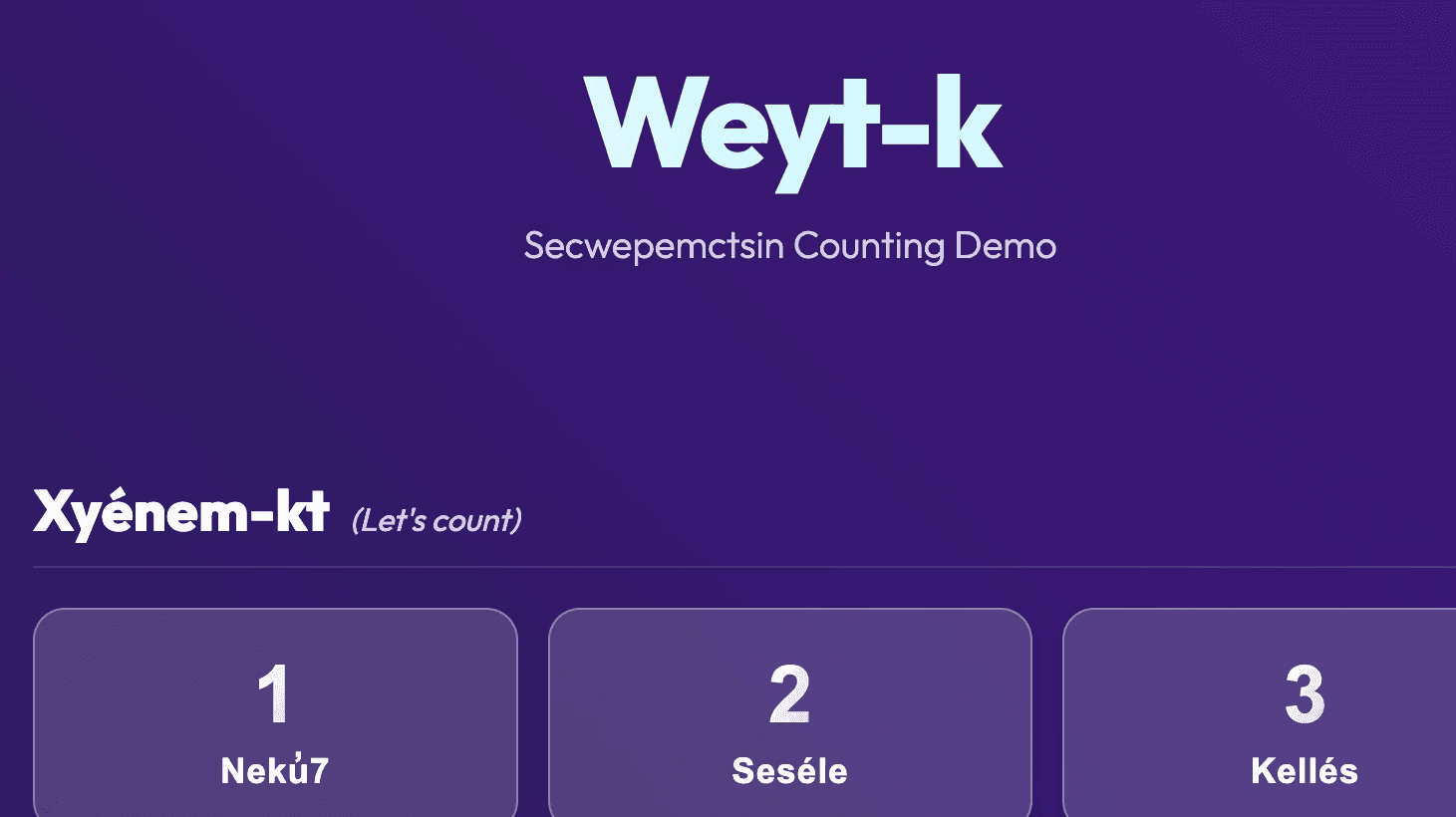
In my last post, I talked about how design is often more about empathy than winning a pitch. This philosophy was put to the test recently when we started working on a basic language prototype for the Simpcw Language Department.
Language revitalization is a massive, complex undertaking. When we looked at what was already available, it was clear that many existing tools weren't really catered toward children, they felt more like rigid databases than living resources. We wanted to build something that was the "minimum thing we could do to help" right now, while keeping the door open for something much bigger.
You can check out the prototype here: language.chuchua.tech
Listen to what is needed
One of the most impactful moments in this project came from a conversation with a Head Start (preschool) teacher.
Usually, when people think of "ed-tech" for kids, they imagine iPads and gamified apps. But she was very clear: she isn’t going to sit a group of preschoolers in front of a screen all day. That’s not how they learn. Instead, she needed a tool that helped her.
She told me she would use the prototype to help her pronounce Secwepemctsin words correctly so she could then teach them to the children in person. It’s a great example of why we have to look at what people actually do. The technology isn’t the teacher; the technology is the support for the teacher. By building a simple, clean interface that prioritizes clear audio and easy navigation, we’re supporting the human relationship at the heart of the classroom.
Why data sovereignty matters
Beyond the UI, there is a much bigger conversation happening here about Data Sovereignty.
Often, when communities use "free" language apps, they lose control over their own data. For the Simpcw people and many other Nations across Canada, owning and governing their own information is a matter of cultural safety.
By creating a custom prototype, we are helping the community:
Reclaim authority over how their language is stored and shared.
Protect their stories and intellectual property within a system they control.
Build local capacity rather than relying on a third-party corporation that might not be around in five years.
The "minimum" is a start
We aren't trying to build the next Duolingo or make a million dollars. We wanted to build a foundation that respects the professional authority of the Simpcw Language Department and provides immediate value to their educators.
It’s a simple tool, but it’s a tool that belongs to the community. At the end of the day, that’s what this work is about, using our skills to support local education and ensure that sacred information is held with the care and respect it deserves.
What do you think?
Should language tools focus more on the "human in the loop" like the teacher in this story, or are you a fan of more screen-based learning? W’d love to hear your thoughts.
If you’re interested in learning more about Secwepemctsin or want to discuss how we can help your community build sovereign data tools, reach out to us here.